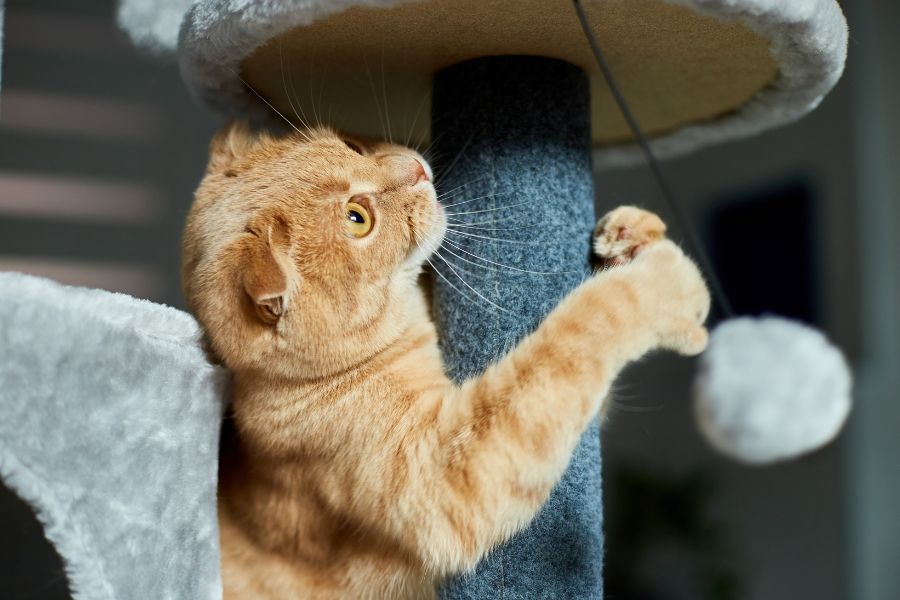
If you share your home with a cat, you already know the struggle. One day, your couch looks perfect, and the next day it’s covered in claw marks. Scratching is one of the most common concerns for cat owners, and it can feel frustrating when nothing seems to work.
The good news is that scratching is completely normal behavior. The goal is not to stop your cat from scratching, but to guide that behavior in the right direction.
In this guide, you’ll learn how to stop cats from scratching furniture using practical, proven methods. You’ll also understand why cats scratch furniture, so you can address the root cause instead of just reacting to the damage.
Why Do Cats Scratch Furniture?
Before you can solve the problem, it helps to understand why it happens.
1. Scratching Is Instinctive
Cats are born with the urge to scratch. It helps them:
- Remove old layers from their claws
- Stretch their muscles
- Stay physically active
This behavior is not something you can train away completely.
2. Marking Territory
Cats have scent glands in their paws. When they scratch, they leave both a visual mark and a scent. This helps them feel secure in their space.
Furniture often becomes a target because it is central, visible, and frequently used.
3. Stress or Anxiety
Changes in the home, new pets, or even small routine shifts can cause stress. Scratching can act as a coping mechanism.
4. Lack of Better Options
If your cat doesn’t have a proper scratching surface, your furniture becomes the default choice.
How to Stop Cats from Scratching Furniture
When people search for how to stop cats from scratching furniture, they often look for quick fixes. But long-term success comes from combining several strategies.
1. Provide the Right Scratching Posts
This is the most important step.
Choose the Right Type
Cats have preferences. Some like vertical posts, while others prefer flat surfaces.
Try options like:
- Tall scratching posts
- Horizontal scratch pads
- Cardboard scratchers
- Sisal-covered posts
Placement Matters
Place scratching posts:
- Near furniture, your cat already scratches
- In areas where your cat spends time
- Close to sleeping spots (cats like to stretch and scratch after waking up)
2. Make Furniture Less Appealing
While giving alternatives, you also need to protect your furniture.
Use Deterrents
Cats dislike certain textures and smells. You can try:
- Double-sided tape
- Furniture covers
- Citrus-based sprays (safe for pets)
Rearrange Temporarily
Move items slightly or block access to favorite scratching spots while training your cat to use alternatives.
3. Encourage Positive Behavior
Training works best when it’s rewarding.
Reward Immediately
When your cat uses a scratching post:
- Offer treats
- Use gentle praise
- Engage in play
This helps your cat connect the action with a positive outcome.
Use Catnip or Toys
Rub catnip on scratching posts or hang toys nearby to make them more attractive.
4. Keep Your Cat’s Nails Trimmed
Regular nail trimming reduces damage and makes scratching less destructive.
- Trim every 2–3 weeks
- Use proper pet nail clippers
- Avoid cutting too close to the quick
If you’re unsure, a veterinary professional can help demonstrate safe trimming techniques.
5. Address Underlying Stress
If scratching increases suddenly, look for triggers.
Ask yourself:
- Has anything changed in the home?
- Is your cat getting enough playtime?
- Are there new pets or visitors?
Provide:
- Consistent routines
- Safe hiding spaces
- Daily interactive play
6. Avoid Punishment
Punishing your cat can make things worse.
- It increases stress
- It damages trust
- It does not teach the correct behavior
Instead, redirect your cat to an appropriate scratching surface.
How to Stop Cats from Scratching Furniture at Night
Nighttime scratching can be especially frustrating.
1. Increase Daytime Activity
A tired cat is less likely to scratch at night. Schedule active play sessions during the day.
2. Create a Routine
Feed, play, and settle your cat at consistent times to reduce restlessness.
3. Provide Night-Friendly Scratch Options
Place scratching posts near sleeping areas so your cat has an appropriate outlet.
Choosing the Best Scratching Solutions for Your Home
Every cat is different, so finding the right solution may take some trial and error.
Test Different Materials
Cats may prefer:
- Cardboard
- Carpet
- Sisal
Observe what your cat naturally gravitates toward.
Match Height and Stability
Scratching posts should:
- Be tall enough for a full stretch
- Stay stable during use
Wobbly posts often get ignored.
When to Seek Veterinary Advice
Sometimes scratching behavior is linked to health or behavioral concerns.
If you notice:
- Sudden aggressive scratching
- Signs of anxiety or withdrawal
- Changes in appetite or grooming
It’s a good idea to visit our website to learn more about professional support and when veterinary care may be needed.
A veterinarian can help rule out medical issues and provide tailored behavioral guidance.
Common Mistakes to Avoid
Understanding what not to do is just as important.
1. Ignoring the Behavior
Scratching won’t go away on its own. Early intervention is key.
2. Offering Only One Scratching Option
Cats like variety. Provide multiple options around your home.
3. Placing Posts in Low-Traffic Areas
Cats prefer to scratch where activity happens, not in hidden corners.
Conclusion
Scratching is a natural and necessary behavior for cats. The goal is not to stop it, but to guide it in a way that protects your home and keeps your cat happy.
By understanding why cats scratch furniture and applying the right strategies, you can create a balanced environment that works for both of you. Focus on providing proper outlets, encouraging good habits, and staying consistent.
If scratching behavior becomes difficult to manage or seems linked to stress or health concerns, professional guidance can make a real difference. Take the next step and book an appointment to get personalized advice that supports both your pet’s well-being and your peace of mind.
Long-Term Success: Building Better Habits
Consistency is what brings results.
- Reinforce good behavior daily
- Keep scratching posts accessible
- Adjust your approach based on your cat’s response
Over time, your cat will naturally choose appropriate surfaces.
Frequently Asked Questions(FAQs):
1. How do I stop my cat from scratching the couch?
A: Provide a scratching post near the couch and use deterrents like double-sided tape on the surface. Reward your cat when it uses the post.
2. Why does my cat ignore scratching posts?
A: The post may not match your cat’s preference. Try different materials, heights, and locations.
3. Is declawing a safe option?
A: Declawing is not recommended. It can cause pain and long-term behavioral issues. Focus on humane alternatives.
4. How often should I trim my cat’s nails?
A: Every 2–3 weeks is typical, depending on how fast your cat’s nails grow.
5. Can stress cause increased scratching?
A: Yes. Changes in the environment or routine can trigger more scratching. Address the source of stress.
6. What is the fastest way to protect furniture?
A: Use a combination of deterrents and scratching alternatives. Immediate protection comes from barriers, while training builds long-term habits.