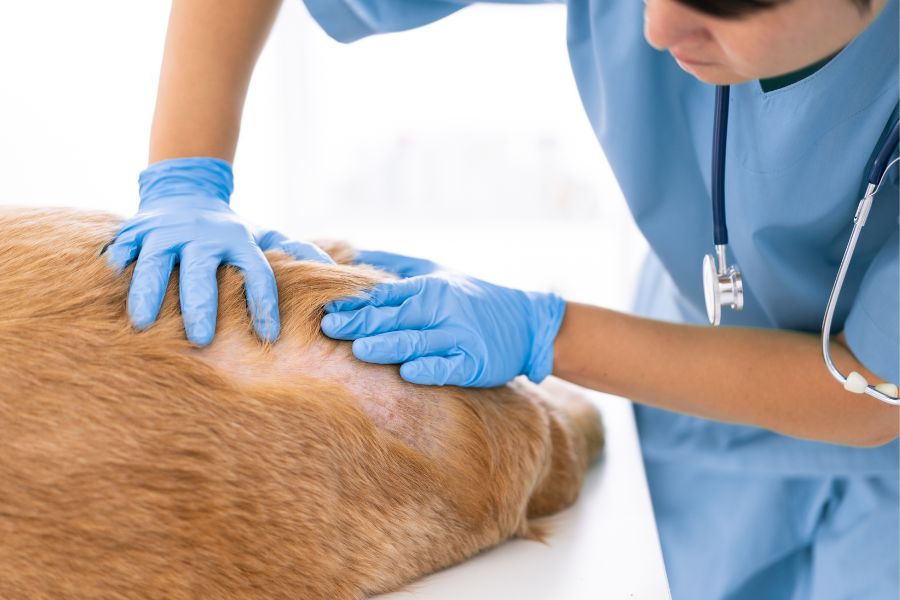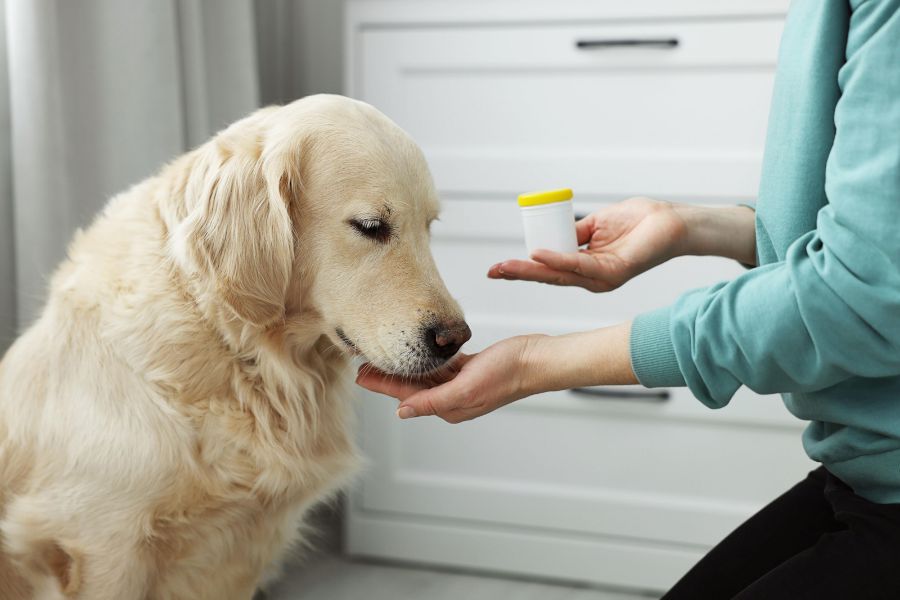
Apoquel is prescribed for dogs with persistent itching, allergic dermatitis, and atopic dermatitis. It can reduce scratching, licking, and chewing, but does not remove the allergy trigger. This guide covers its uses, labeled dose chart, seven possible side effects, long-term safety, and questions. The chart is a reference only; a veterinarian must confirm each dog’s tablet strength and schedule.
What Is Apoquel and What Does It Treat?
Apoquel contains oclacitinib, a medicine that blocks selected signaling pathways involved in itch and inflammation. It is not a steroid or antihistamine. It is prescribed to control itching associated with allergic dermatitis and signs of atopic dermatitis in dogs at least 12 months old.
Dogs may receive it for environmental allergies or ongoing skin disease. Some improve within hours. Apoquel controls symptoms; it does not cure allergies or replace flea control and infection treatment.
Apoquel Dosage for Dogs: Simple Dose Chart
The labeled dose is 0.4–0.6 mg of oclacitinib per kilogram of body weight (0.18–0.27 mg per pound). The usual schedule is twice daily for up to 14 days, followed by once-daily maintenance when prescribed.
| Dog’s weight | Tablet strength and amount per dose |
|---|---|
| 3–4.4 kg (6.6–9.9 lb) | Half of 3.6 mg |
| 4.5–5.9 kg (10–14.9 lb) | Half of 5.4 mg |
| 6–8.9 kg (15–19.9 lb) | One 3.6 mg |
| 9–13.4 kg (20–29.9 lb) | One 5.4 mg |
| 13.5–19.9 kg (30–44.9 lb) | Half of 16 mg |
| 20–26.9 kg (45–59.9 lb) | Two 5.4 mg |
| 27–39.9 kg (60–89.9 lb) | One 16 mg |
| 40–54.9 kg (90–129.9 lb) | One and a half 16 mg |
| 55–80 kg (130–175.9 lb) | Two 16 mg |
Amounts are per dose, not the daily total. Product labels can differ. Never calculate or change your dog’s dose from this chart; confirm tablet strength and frequency with the prescribing professional. Apoquel may be given with or without food.
7 Possible Apoquel Side Effects in Dogs
Many dogs tolerate Apoquel, but unwanted effects can occur. Watch for changes after treatment starts and report persistent or worsening signs.
1. Vomiting
Some dogs may vomit after a dose. A single episode should be reported if it recurs, accompanies weakness, or prevents medication and food intake. Do not automatically repeat a vomited dose.
2. Diarrhea
Loose stool or diarrhea can occur. Note frequency, appearance, and duration. Blood, repeated watery stools, dehydration, or marked discomfort warrants prompt veterinary advice.
3. Reduced Appetite
A dog may show less interest in meals. Track food intake and contact the clinic if appetite loss lasts, worsens, or occurs with vomiting or weight loss.
4. Lethargy
Unusual tiredness or reduced activity may be noticed. Severe weakness, collapse, breathing difficulty, or difficulty waking is urgent and should not be treated as a routine medication reaction.
5. Increased Thirst
Some dogs may drink more than usual. Keep fresh water available and note changes in drinking and urination. Sudden or pronounced changes deserve assessment.
6. Skin or Ear Infections
Apoquel changes immune-system activity and may increase susceptibility to infections, including skin, ear, and urinary infections. Look for odor, redness, discharge, sores, frequent urination, or renewed itching. An infection needs diagnosis and appropriate treatment.
7. New Lumps or Worsening Growths
The medication label warns about possible worsening of certain cancers and reports of new growths. A lump does not automatically mean cancer. Arrange an examination for any new, growing, bleeding, or changing mass.
Is Apoquel Safe for Long-Term Use?
Long-term treatment may suit dogs after an individual benefit-risk review. Checkups assess response and infection risk. Tell the clinic about previous cancers, recurring infections, and every medicine or supplement your dog receives.
It is not for dogs younger than 12 months or those with serious infections. Use caution with recurrent infections or certain cancers. Combine it with immune-suppressing medicines only under specific professional direction.
What Should You Do If a Dose Is Missed?
Follow the clinic’s missed-dose instructions. Never double a dose. If you are unsure whether your dog swallowed a tablet, call before giving another.
When Should Your Dog Be Checked?
Fleas, mites, food reactions, and infections can also cause itching. An examination helps identify the cause. Dog diagnostic care can support investigation when symptoms persist or change during treatment.
Help Your Dog Find Lasting Itch Relief
Apoquel can improve comfort, but correct dosing and monitoring matter. Track itching, appetite, energy, bowel movements, thirst, and skin changes. Report concerns instead of adjusting medication yourself.
If your dog is persistently itchy or develops side effects, book an appointment for an examination and guidance on treatment options.
Frequently Asked Questions(FAQs):
1. How quickly does Apoquel work in dogs?
A: Some dogs show reduced itching within hours, while others need more time or additional treatment. The response depends on the cause and severity of the skin problem. Contact the clinic if symptoms remain uncontrolled.
2. Can dogs take Apoquel every day?
A: Some dogs receive once-daily maintenance after the initial treatment period. Daily use should follow a prescribed plan with periodic reassessment. Never extend twice-daily dosing beyond the instructed period without professional approval.
3. Should Apoquel be given with food?
A: Apoquel can be administered with or without food. Follow the product and clinic directions, use a consistent routine, and contact the clinic if your dog vomits or refuses the tablet.
4. Can Apoquel cause cancer in dogs?
A: The product label warns that Apoquel may worsen certain neoplastic conditions and notes reports of new growths. This does not mean every treated dog develops cancer. Discuss individual risk and report new lumps.
5. Can puppies take Apoquel?
A: Apoquel is not approved for dogs younger than 12 months under the product labeling. A puppy with severe itching needs an examination to identify the cause and choose an age-appropriate treatment.
6. What happens if I stop giving Apoquel?
A: The medication can be discontinued without tapering according to product information, but itching may return if the underlying allergy remains. Ask the prescribing clinic how to manage recurring symptoms safely.