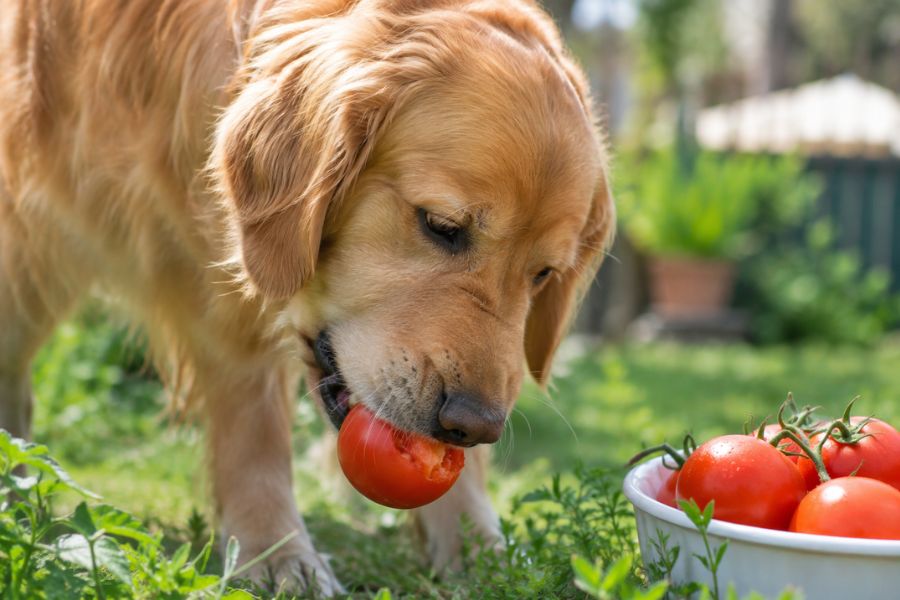
A dog eating a tomato can be harmless or require attention, depending on the tomato’s ripeness, amount consumed, and part eaten. Ripe red tomato flesh is generally considered safe for dogs in small amounts.
Green tomatoes, stems, and leaves contain higher levels of compounds that can cause problems. This guide explains what to watch for, when symptoms may appear, what to do at home, when veterinary care is needed, and how to prevent another tomato-related scare.
Can Dogs Eat Tomatoes?
Dogs can usually eat small pieces of ripe, red tomato flesh. A ripe tomato provides water and fiber. It should be an occasional treat rather than a regular part of a dog’s diet.
Portion matters. A small dog needs less than a large dog. Too much tomato may cause digestive upset even when the fruit is ripe. Wash the tomato, remove the stem and leaves, and offer a bite-sized piece without salt, seasoning, sauces, or other ingredients.
What Happens If a Dog Eats a Tomato?
It depends on what was swallowed. If your dog ate a small piece of ripe tomato, serious poisoning is unlikely. You may notice no reaction at all. A larger serving can cause loose stool, vomiting, discomfort, or gas.
Concern rises when a dog eats unripe green tomato, tomato plant leaves, or stems. These parts contain more solanine and tomatine. Large exposures can affect the digestive system and, in severe cases, the nervous system.
Signs to Watch After Tomato Exposure
Monitor for vomiting, diarrhea, drooling, loss of appetite, discomfort, weakness, sleepiness, confusion, tremors, or an abnormal heart rate. Severe signs need urgent attention.
Symptoms are not guaranteed. Timing and severity depend on the amount consumed, the dog’s size, and the material swallowed.
Are Green Tomatoes Toxic to Dogs?
Green tomatoes deserve more caution than ripe red tomatoes. They contain higher concentrations of tomatine, a naturally occurring compound that can be harmful when enough is consumed. A single small bite may not cause illness, but a substantial amount warrants a call for professional guidance.
Tomato leaves and stems are also riskier. Dogs that chew garden plants can consume these parts without owners noticing. Keep tomato plants fenced off or out of reach, especially when fruit is growing.
What Should You Do If Your Dog Eats a Tomato?
Stay calm and identify what your dog ate. Check whether it was ripe or green, estimate the amount, and determine whether stems or leaves were included. Note your dog’s approximate weight and any symptoms.
Do not make your dog vomit unless a qualified professional specifically instructs you to do so. Home remedies can create additional risks. Remove remaining tomato pieces from your dog’s reach and keep the packaging or plant available for identification if needed.
Contact a veterinary professional when your dog ate a large amount, swallowed green tomatoes, consumed stems or leaves, or develops concerning symptoms. Advice can determine whether monitoring is appropriate or an examination is necessary.
Can Dogs Eat Tomato Sauce?
Plain tomato sauce is not automatically safe for dogs. Commercial sauces often contain onion, garlic, excess sodium, sugar, spices, or other ingredients that dogs should avoid. Pizza sauce and pasta sauce can carry the same concern.
Read the ingredient label before sharing human food. A small accidental lick may cause no problem, but larger amounts or harmful ingredients deserve professional advice.
Can Puppies Eat Tomatoes?
Puppies can eat tiny pieces of ripe tomato, but their digestive systems are still developing. New foods should be introduced in small quantities. A puppy that develops repeated vomiting, diarrhea, weakness, or poor appetite should be assessed promptly.
When Is Tomato Exposure an Emergency?
Seek urgent veterinary attention if your dog shows severe weakness, repeated vomiting, difficulty walking, tremors, collapse, breathing changes, seizures, or marked behavioral changes after eating tomato plant material. Concern is greater after a large or unknown exposure.
One small piece of ripe tomato without symptoms is usually less concerning.
Preventing Tomato-Related Problems
Keep garden plants behind barriers and teach dogs not to forage. Pick ripe tomatoes regularly so fallen fruit does not become an easy snack. Store tomatoes where your dog cannot reach them.
Supervision matters during gardening. Remove discarded stems and leaves from the yard. Make household members aware that tomato-based human foods may contain ingredients that are unsafe for dogs.
Frequently Asked Questions(FAQs):
1. Can a dog eat one ripe tomato?
A: A small amount of ripe red tomato flesh is generally safe for most healthy dogs. Remove the stem and leaves, wash the fruit, and serve a bite-sized piece without seasoning or sauce.
2. What if my dog eats a green tomato?
A: Green tomatoes contain more tomatine than ripe tomatoes. A small bite may cause no illness, but larger amounts can be concerning. Monitor your dog closely and contact a professional for personalized guidance.
3. Can tomato leaves hurt dogs?
A: Tomato leaves contain higher concentrations of potentially harmful compounds than ripe fruit. Dogs that eat a noticeable amount may develop digestive or neurological symptoms. Contact a professional if your dog consumed leaves or shows unusual behavior.
4. How much tomato is safe for dogs?
A: There is no single safe portion for every dog. Size, health, diet, and the tomato’s ripeness matter. A small piece of ripe flesh is a sensible starting point for most healthy dogs.
5. Can dogs eat cooked tomatoes?
A: Cooked, plain ripe tomato flesh can be acceptable in small quantities. The concern is what was added during cooking. Avoid products containing onion, garlic, heavy seasoning, excessive salt, or rich sauces.
6. Should I call a vet if my dog eats a tomato?
A: Call for advice if your dog ate green tomatoes, leaves, stems, a large quantity, or food containing questionable ingredients. Immediate attention is appropriate for severe vomiting, tremors, collapse, seizures, or breathing problems.